Data quality as a product feature
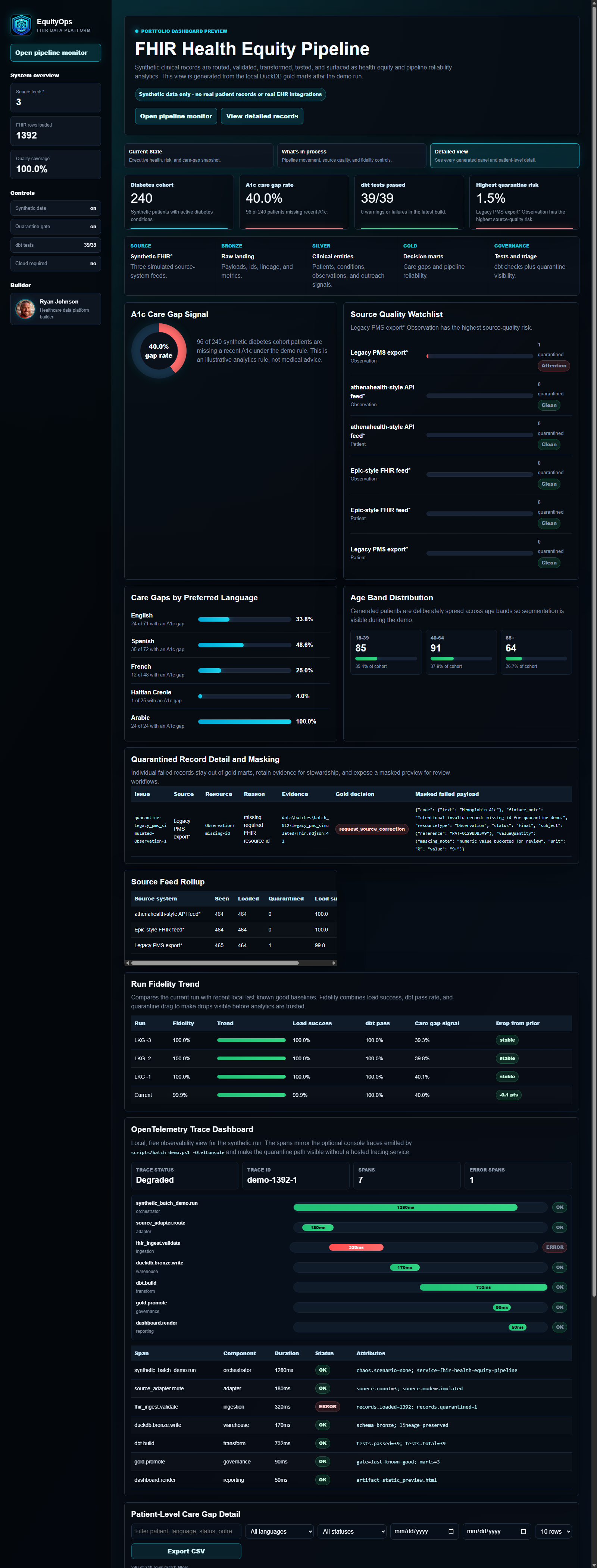
Quarantine, triage, source watchlists, promotion review and last-known-good snapshots keep quality visible instead of treating it as a back-office concern.
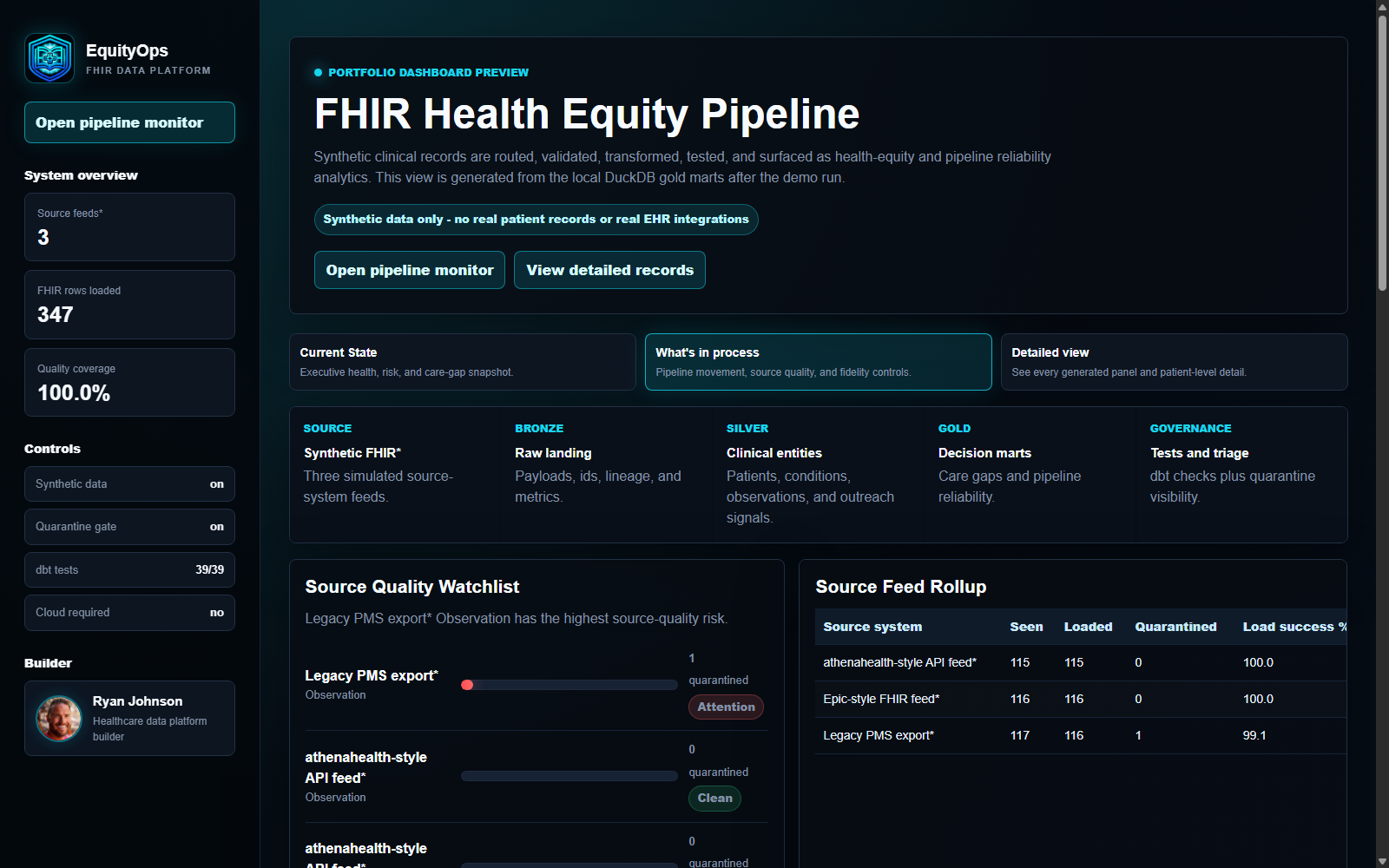
FHIR Health Equity Pipeline is a local-first synthetic healthcare data platform that demonstrates how multi-source FHIR-shaped data can be ingested, validated, quarantined, modeled and surfaced as stakeholder-ready analytics.
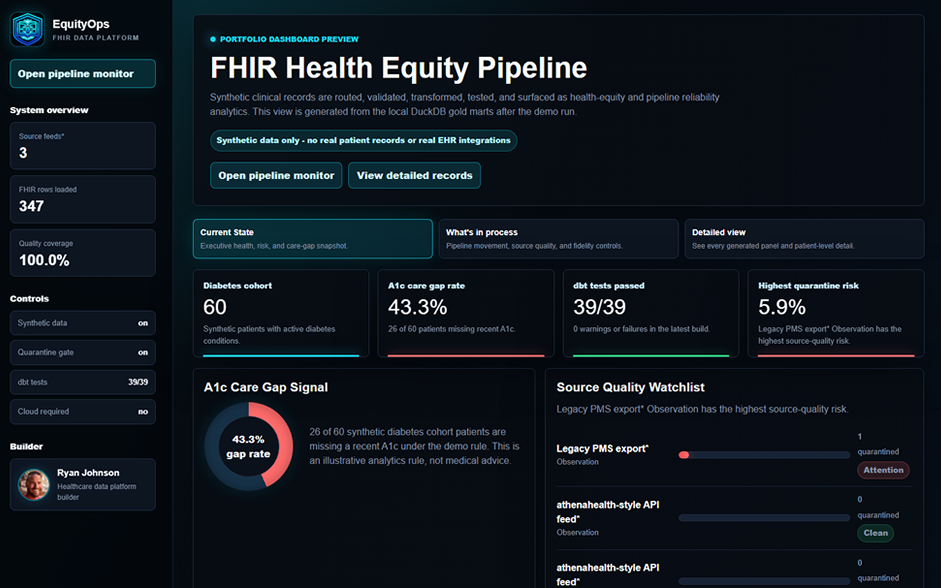
Healthcare organizations can receive data from multiple EHR, practice-management and integration feeds. Even when the payloads are FHIR-shaped, completeness, coding, timing and operational quality can vary by source.
This reference implementation asks whether synthetic multi-source FHIR data can be governed, tested, modeled and converted into trustworthy analytics for care gaps, health equity and pipeline reliability.
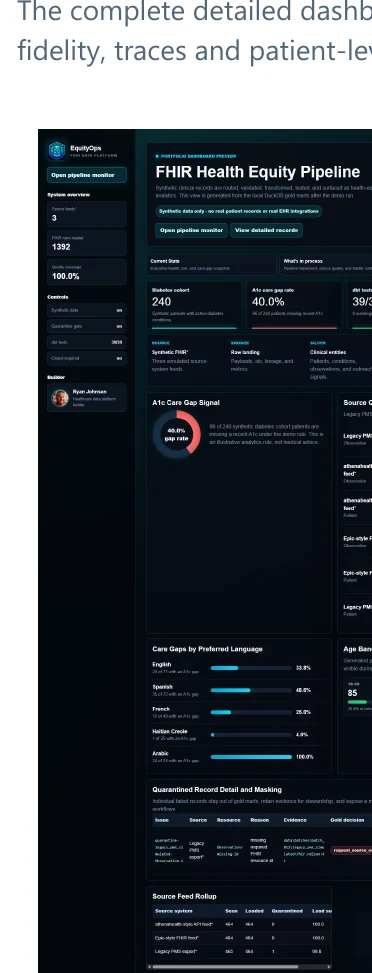
The pipeline routes synthetic FHIR records through source adapters, validation and quarantine, DuckDB bronze landing, dbt transformations, quality checks and gold analytical marts. Failed records remain visible for stewardship rather than disappearing from the decision trail.
Synthetic FHIR-shaped records from simulated sources.
Route, tag, quarantine and emit quality evidence.
DuckDB bronze plus dbt bronze, silver and gold.
Identity, reference, accepted-value and plausibility gates.
Care-gap, reliability and masked analytical views.
Quarantine, triage, source watchlists, promotion review and last-known-good snapshots keep quality visible instead of treating it as a back-office concern.
Bronze/silver/gold modeling connects raw source evidence to dashboard-ready care-gap and reliability marts.
Pipeline monitoring and OpenTelemetry-style traces expose run fidelity, error paths and operational behavior.
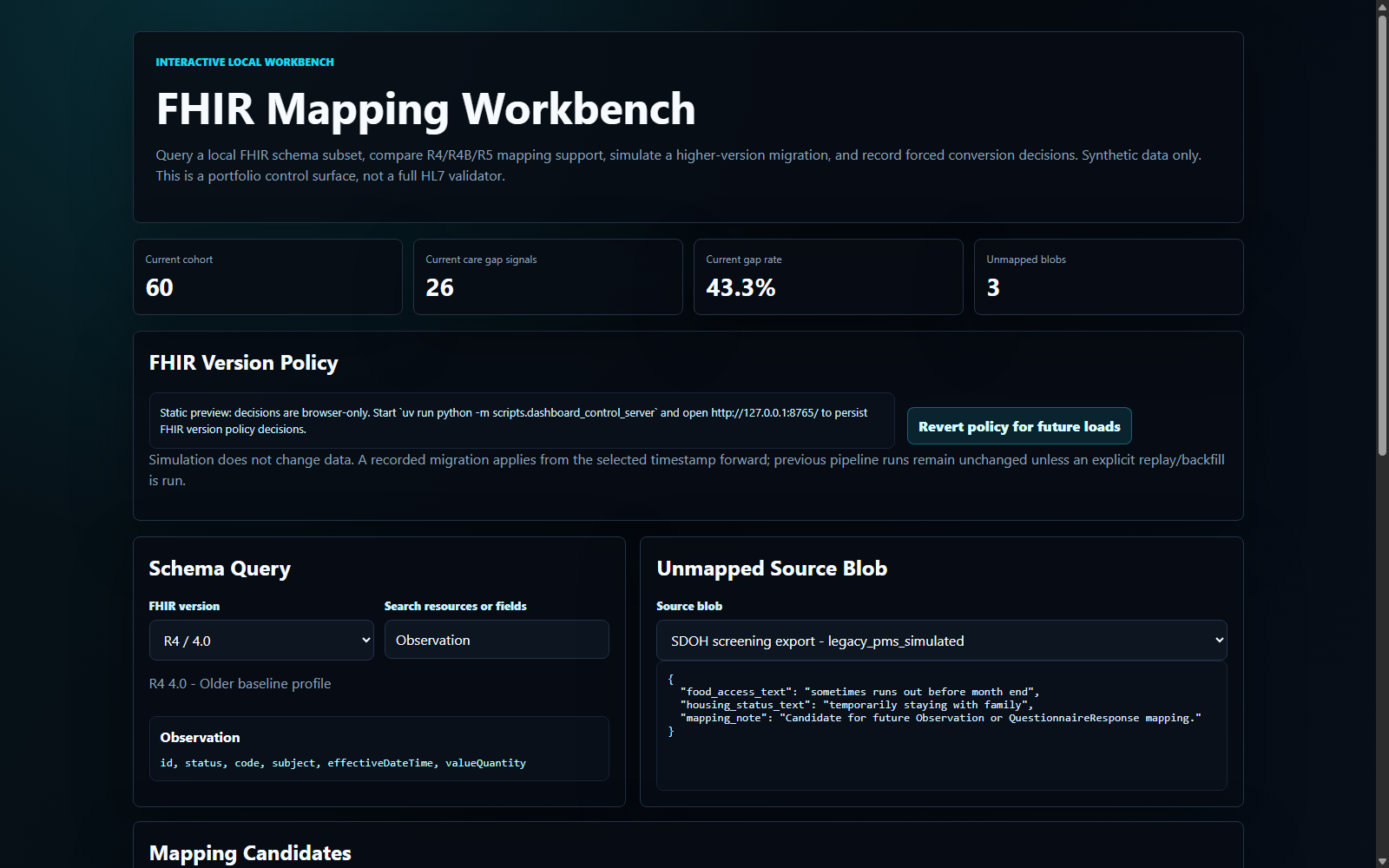
A mapping workbench demonstrates R4/R4B/R5 schema lookup, migration simulation and forced-conversion decision notes.
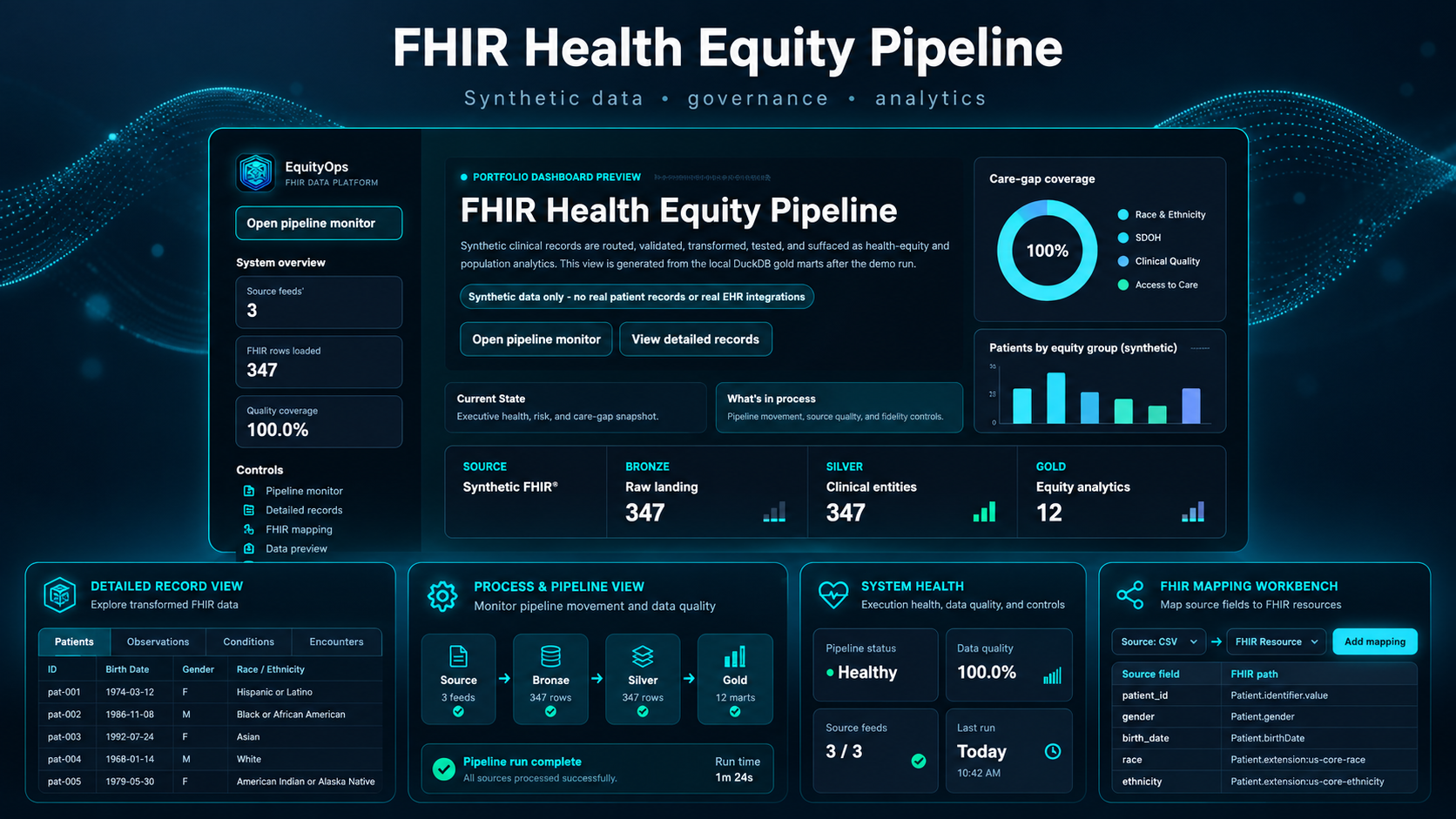
The working reference UI is the evidence. The supporting graphic below summarizes the same architecture at a glance.
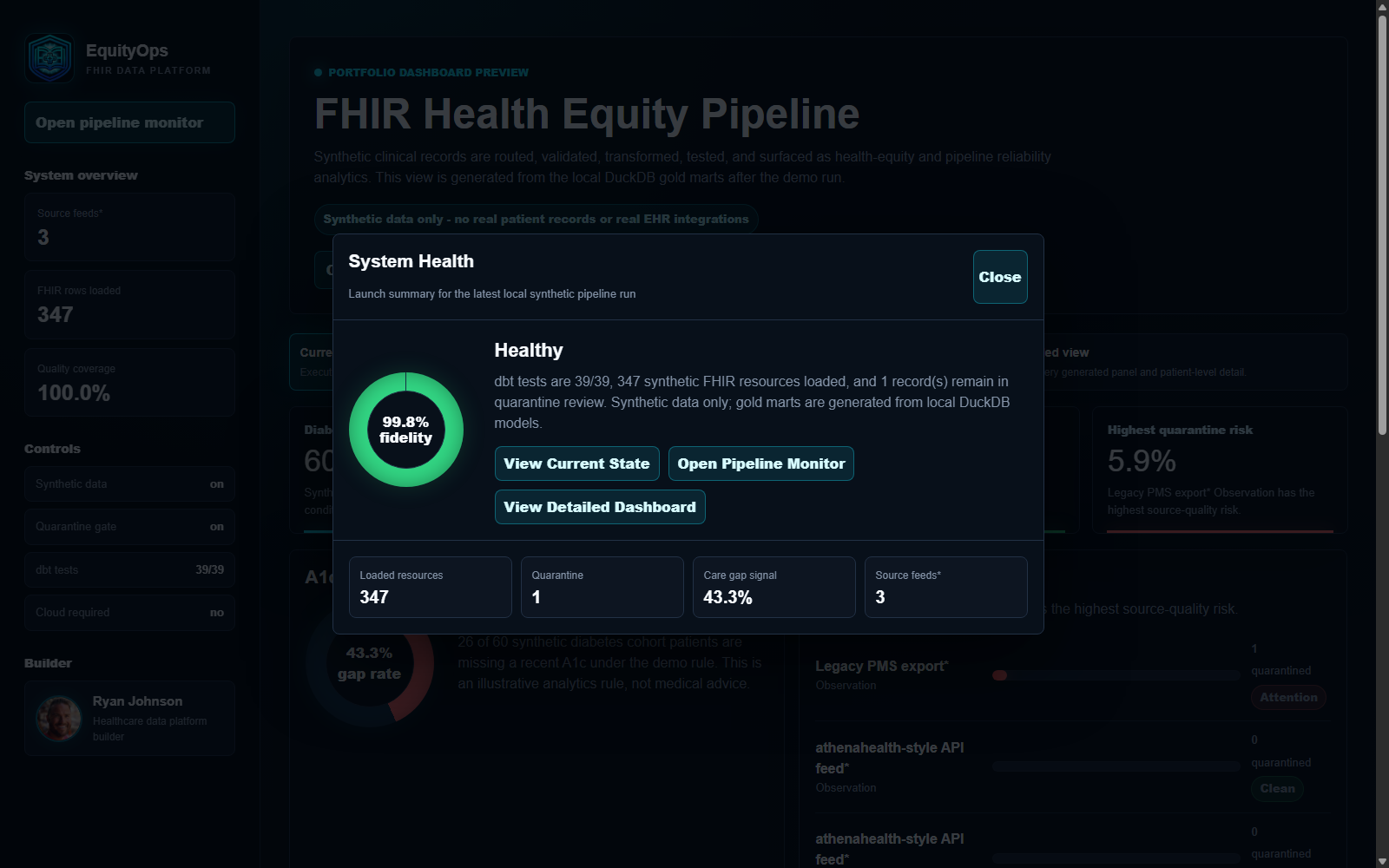
Use this project as a concrete starting point for conversations about healthcare data engineering, analytics, interoperability patterns and governance.